Showing posts with label rocks. Show all posts

Thursday, January 30, 2020

Investigating the Smallest Size Rock: Clay!

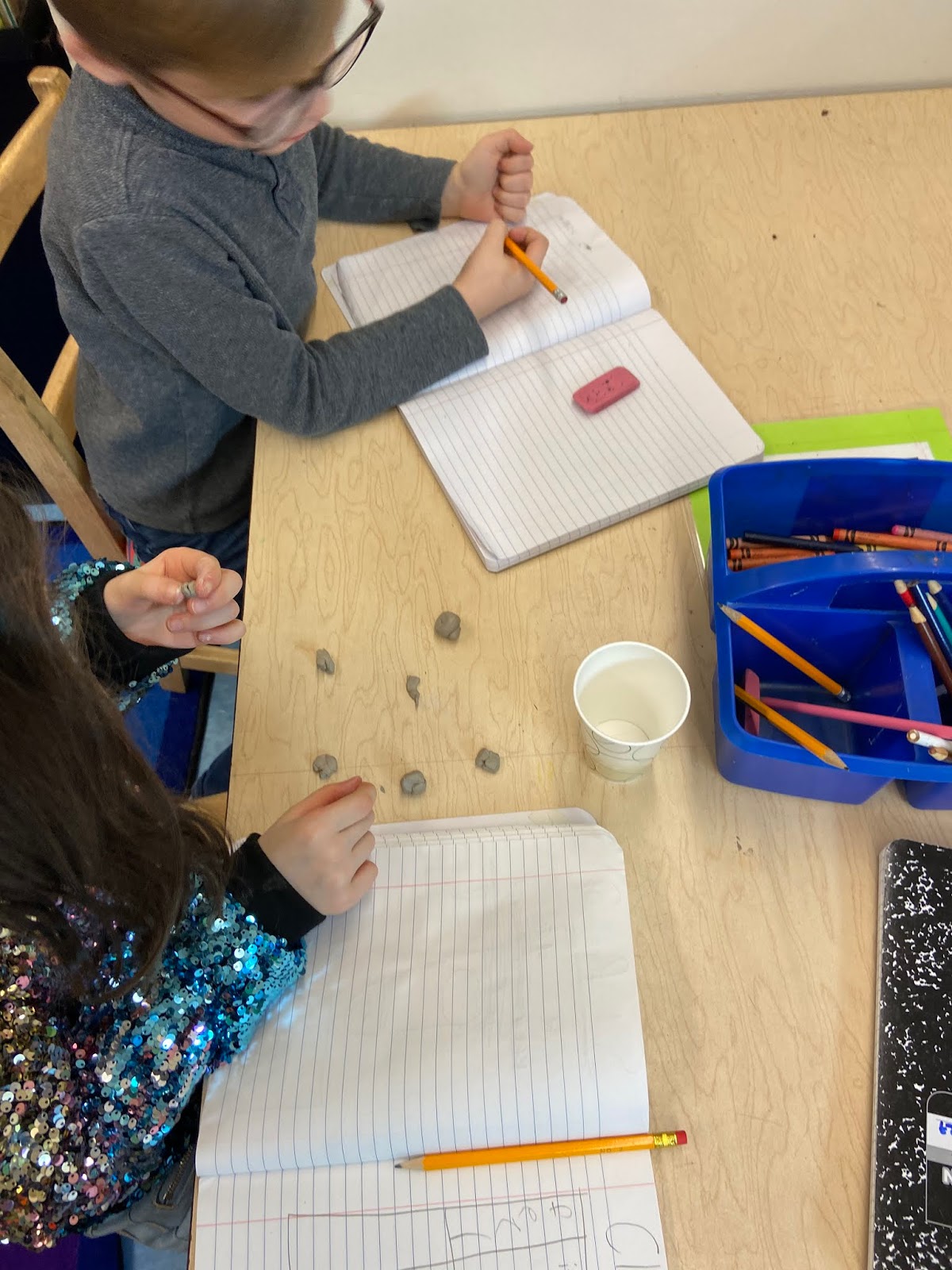
2nd graders are finishing up their unit on Pebbles, Sand and Silt by investigating the smallest size rock...clay.  It is so small, that you can't isolate one grain.  We described how it felt, looked and even smelled. 

We then made two balls of clay and put the larger ball into a paper cup and the smaller ball into a vial filled with water.  We made predications about what the clay would look like the next science class.


It was not a surprise to most of the 2nd graders, that the following week, the clay in the paper cup was hard. Hard as a rock! They were surprised that even though the clay was hard, it still could break!  We put a little water into the cup to see what would happen....the clay softened up again.


The clay in the water broke apart and settled in the bottom of the vial.  The water changed from milky looking to clear!
It's always fun to play with clay no matter how gooey it is!


Thursday, October 17, 2019

2nd Grade Investigates Volcanic Rocks

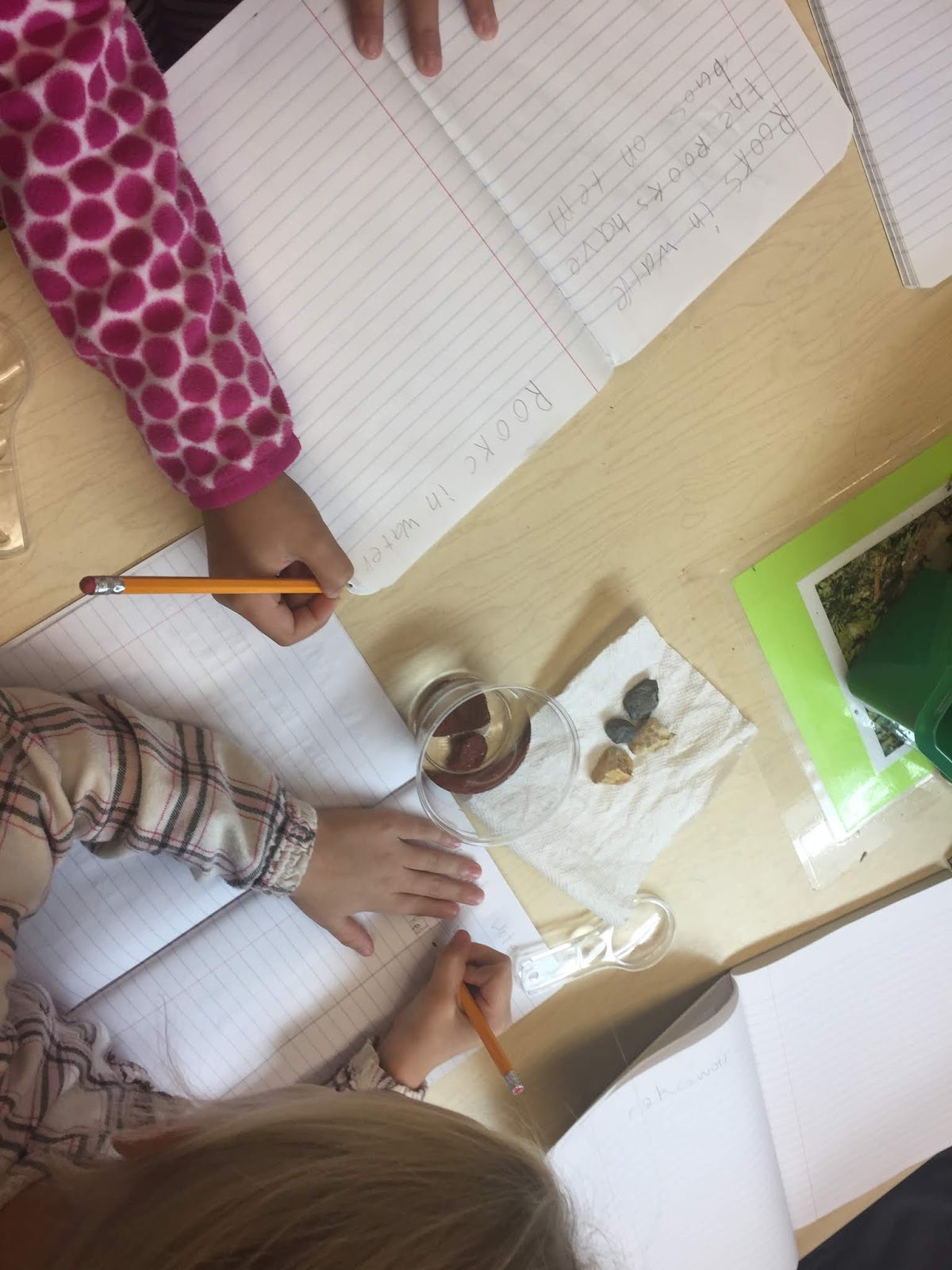
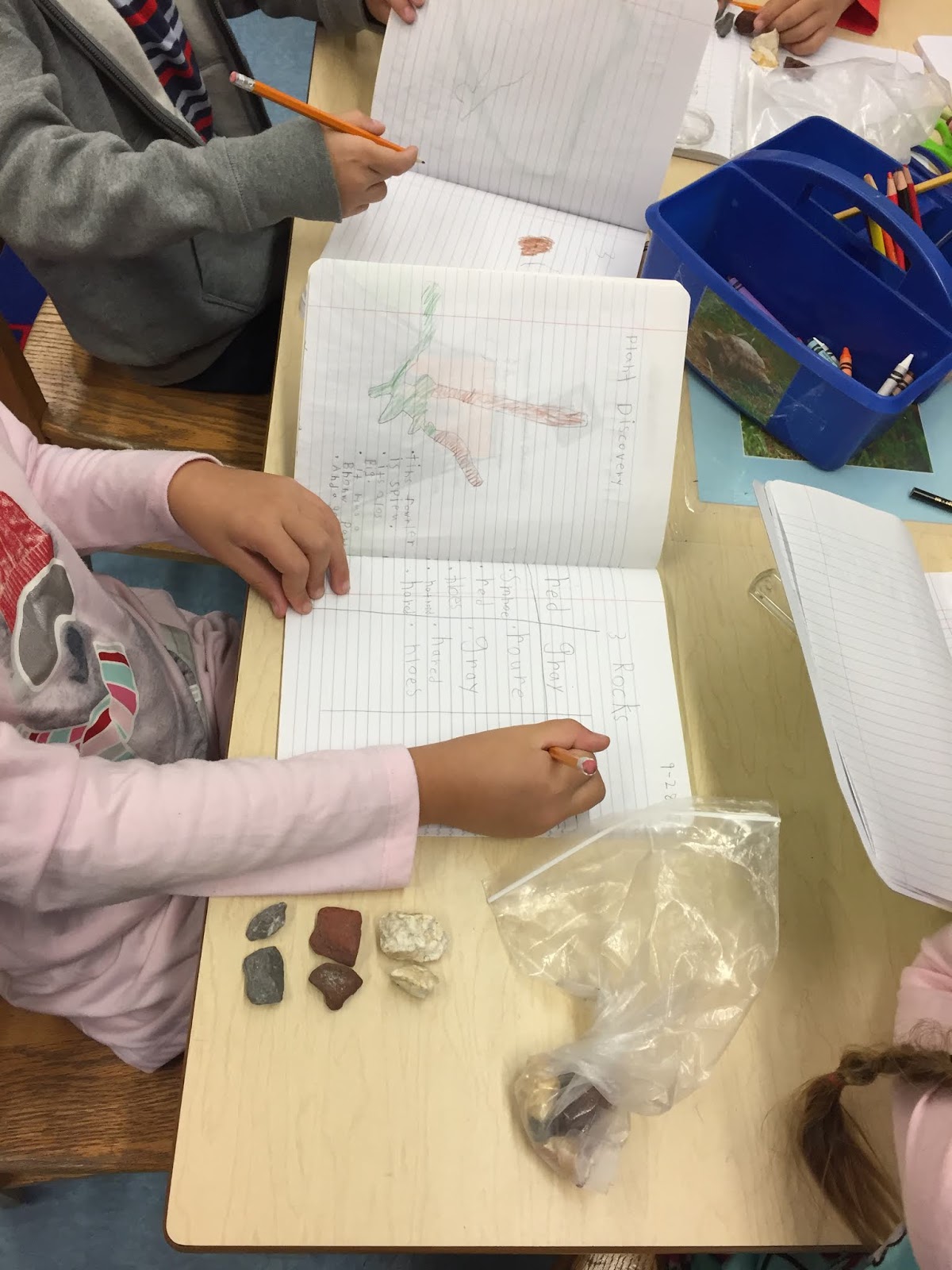
2nd graders have begun their unit on rocks by observing the properties of three different igneous rocks: basalt, tuff and scoria. They described how the rocks felt, looked and even smelled! Then, we rubbed two of the same rocks together to see what happens.  The scoria and tuff both make rock dust while the basalt is such a hard rock that they just make scratch marks.


The next investigation had us putting the rocks, one type at a time, into a cup of water. What would happen? The gray basalt rock looked darker.  The red scoria had bubbles rise from it and it turned lighter in color.  The white tuff turned orange and even purple! There was also a steady stream of very small bubbles coming out of the tuff.  We also noticed that the rock dust made the water look "dirty".     


Tuesday, January 15, 2019

Investigating the Smallest Size Rock: Clay

2nd graders are investigating the properties of the smallest size rock...clay.  It's so small, you can't isolate one grain on its own! We made observations about how the clay looked, felt and smelled.  

The clay looks gray and feels smooth.

It's hard to roll the clay into a ball after using it.


It smells earthy.


I can see the clay on my hands.

It smells stinky!


The clay dries out after using it!

Next we rolled the clay into two balls.  The larger sized ball of clay was put in a cup while the smaller sized ball of clay was put in a vial that was filled with water.  Most of the classes noticed that when the vial was shaken, the clay started to break apart and dissolve.

Shaking as hard as possible to see if the clay would totally dissolve.
(It didn't!)

The more you shake the darker the water
becomes.


It looks like milk.


Look at the cracks.

Is the clay dissolved yet?


The last thing we did is to make two predictions about what the clay in the cup and the clay in the vial will look like the next science class.  Most people thought the clay in the cup would become hard.  There were various predictions about the clay in the vial, some felt it would be completely gone, others thought that it would absorb all the water.

Next science class.....we were both surprised and "knew it"!

Making observations about the clay in the cup (it's hard) and the
clay in the vial (the water is clear and clay flattened out).
The water in the vial is clear again!


It was easy to get the hard dry clay soft again,
just add water! And does it ever feel good!

Sunday, October 14, 2018

2nd Graders Rock!

Over the past few weeks, 2nd grade has been making and recording observations about three igneous rocks: scoria, basalt and tuff. They have described how it looks, feels and even smells as well as what happens to the rocks when they are rubbed together over black paper.

Using a double T chart to help organize observations.


The gray rock, basalt, is smooth.

The scoria, reddish rock, is rough.


The tuff rock leaves a little white on my fingers.

Rubbing the two scoria together makes rock dust!


The tuff is so soft it can even flake off onto the paper.

The gray rock makes white marks on the other grey rock, but
doesn't make dust.

Recording observations in our science notebooks
helps us remember.
2nd graders work together and share information just
like scientists do.


Next they put the rocks, one type at a time, into water and wrote down our observations.  We were so surprised that something happened to each type of rock, but it was important to be patient and watch!

The basalt rock turned darker in the water.

The scoria rock turned darker or brighter depending on the
original color.

Some of the tuff changed colors - orange, cream
and even purple.

The water looks a little dusty.


There are bubbles!

The rocks are smoother when they are wet.


There are tiny bubbles coming from the rock.

It's so cool to see the rocks change colors.

The tuff looks all crackly.