Sunday, October 27, 2019

Billion Oyster Project!

Second grade is excited to become citizen scientists.  We are joining the Billion Oyster Project (BOP)!  BOP is coordinated by the New York Harbor School whose goal is to restore one billion oysters to New York Harbor by 2035. 

I went to two training sessions at BOP on Governors Island to learn how to care for the oysters that will be in our oyster research station (OPS).

Leaving Manhattan.

15 minutes later, Governors Island.

The oyster nursery at the Harbor School.

Oysters filtering the water.


We went out on pier 101 to learn the protocol for measuring the oysters in the ORS.

Lots of life on this ORS!

We found a crab living amongst the oysters.

We have to count the oysters that are living
and then measure the length of those oysters.

Our oyster research station (ORS) will be located at Brooklyn Bridge Park where we will observe, measure and record data and then share it with BOP.

Our ORS is at the "cut out" near Pier 5!

A week before our first field trip to Brooklyn
Bridge Park, I met with the BOP team who
brought the oysters.

We put 4 bags of oysters in the ORS. The oyster on the bottom
has a blood worm on it.


The ORS is secure.

Into the East River they go. Do your thing oysters!


A shrimp and some oyster drills (not so good for our oysters) were left behind. I put them back in
the water.


Two more trips to Governors Island and back to get oysters for a tank in our classroom and learn how to care for them!  


Let the learning begin!


Thursday, October 17, 2019

2nd Grade Investigates Volcanic Rocks

2nd graders have begun their unit on rocks by observing the properties of three different igneous rocks: basalt, tuff and scoria. They described how the rocks felt, looked and even smelled! Then, we rubbed two of the same rocks together to see what happens.  The scoria and tuff both make rock dust while the basalt is such a hard rock that they just make scratch marks.


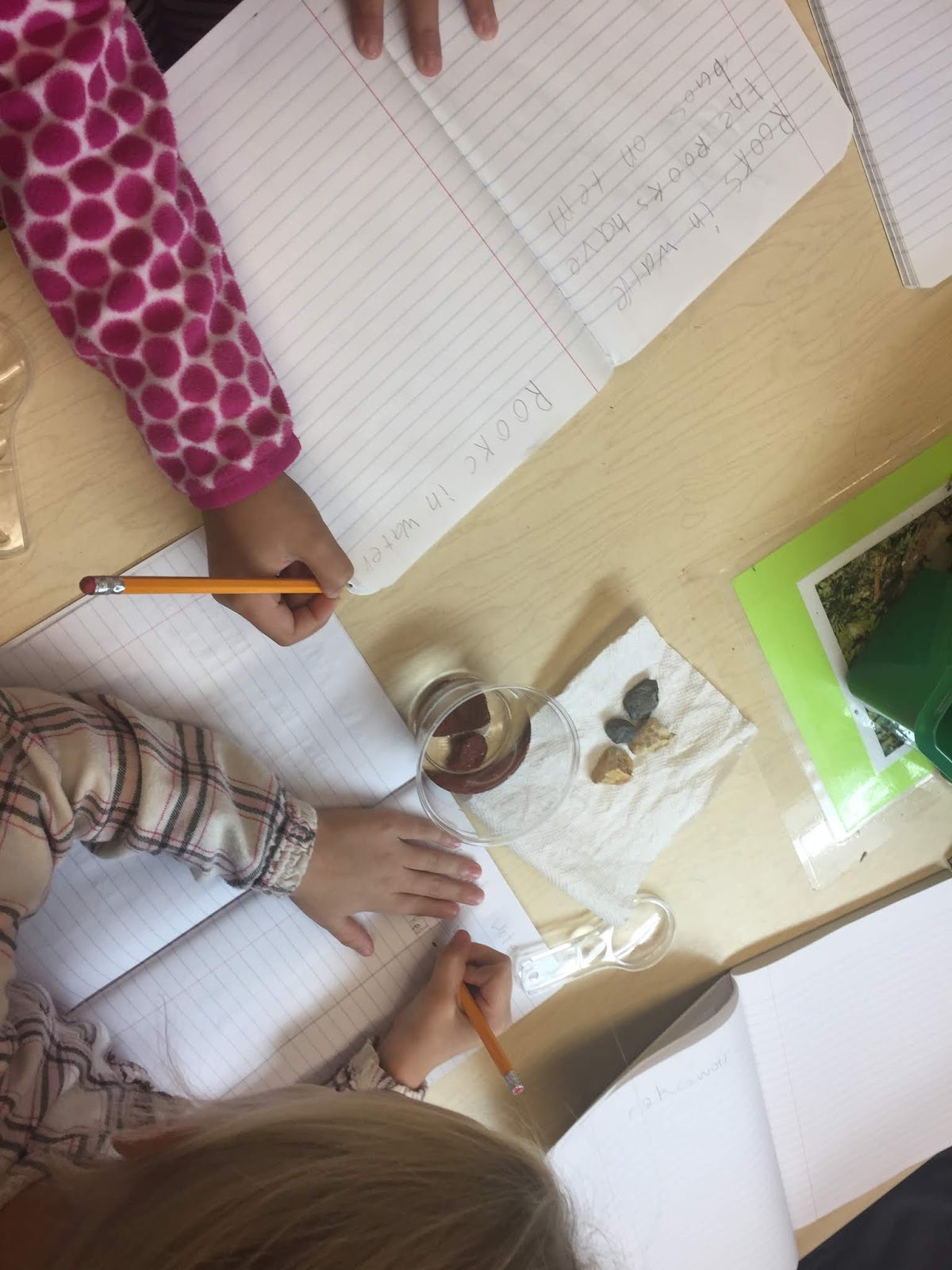
The next investigation had us putting the rocks, one type at a time, into a cup of water. What would happen? The gray basalt rock looked darker.  The red scoria had bubbles rise from it and it turned lighter in color.  The white tuff turned orange and even purple! There was also a steady stream of very small bubbles coming out of the tuff.  We also noticed that the rock dust made the water look "dirty".     


Monday, October 14, 2019

The World of Insects!

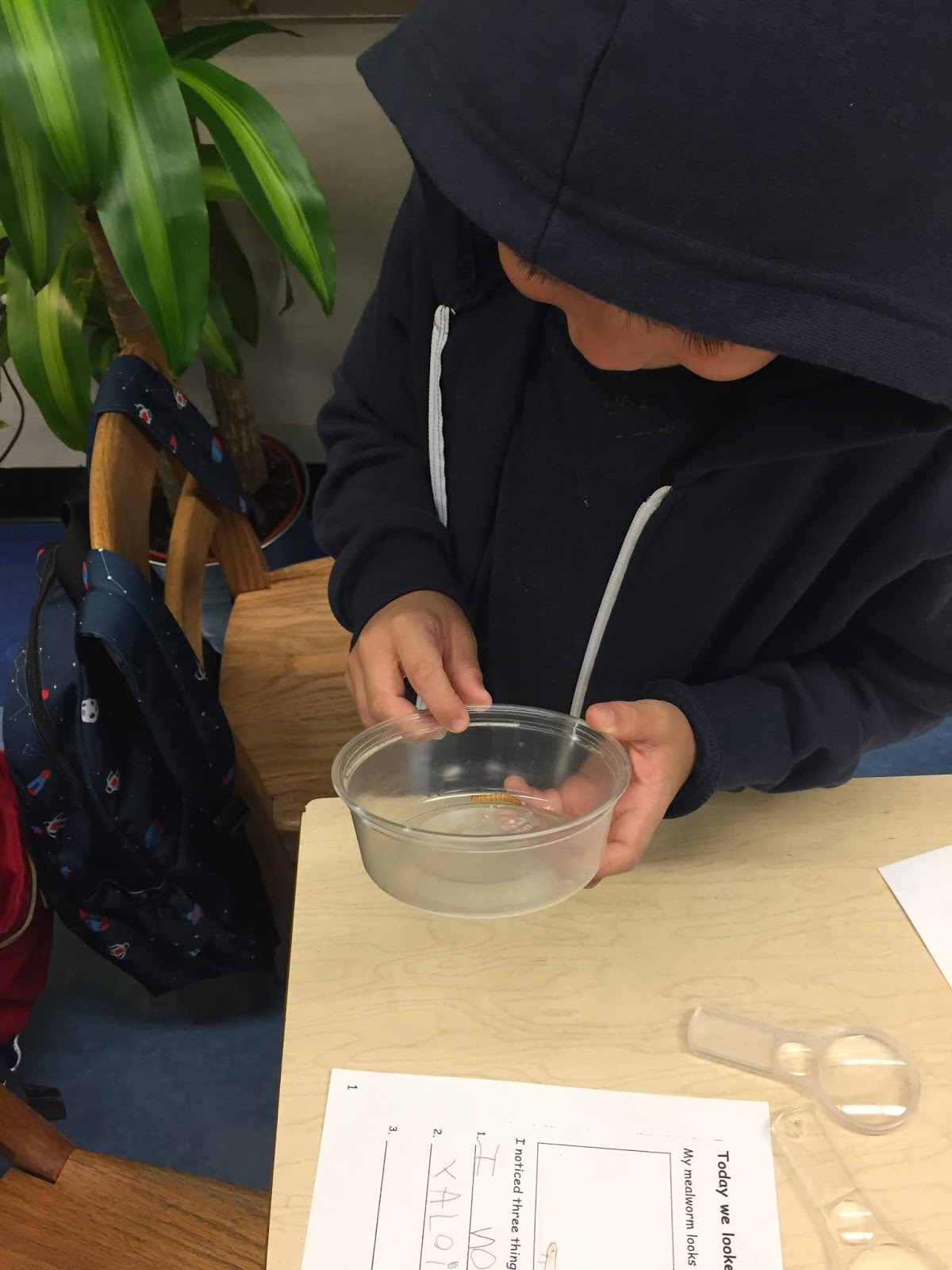
1st graders are learning about insects.  In particular...mealworms!  They don't look or feel like any worms we know!  They are small, brown, have 6 legs and shed their skin. They can move fast, but also like to play dead. They are pretty interesting little insects!


Time to set up the habitat! We know they need food, water, air and place to live.
It took a while to figure out how to give the mealworms water, but we figured that fruits and vegetables were juicy and that should work!