Wednesday, April 5, 2017

1st Grade Investigates Liquids in Containers!

Does each container have the same amount of liquid in it?  That is what the 1st graders are wondering!  First, measure one small vial of water in each container: bottle, cup, vial, 1/4 liter container.  Then they drew the level of liquid in all four containers in their journals.


Next they had to make a prediction about where they thought a second scoop of water would reach in each of the four different containers.

 Now to test the prediction!

Once they finished measuring water from the small vial into all four containers, they thought about what they did for this investigation and looked at their observations to answer the question....Does each container have the same amount of water?  Why do you think that?

Most classes had a mixture of responses.  They all reiterated that liquids take the shape of the container they are in.  Some thought there were different amounts of water in each container, while others stated they added water from the small vial each time so each container had the same amount of water in it, even though it doesn't look like they do.


Wednesday, March 29, 2017

Kindergarten Explores Paper!

Kindergarten has finished exploring the properties of wood and has begun to learn about paper!  We all think it's funny that paper actually comes from wood, so we haven't really finished investigating wood yet!

We are looking at 8 different types of paper: wax paper, paper towel, tagboard, chipboard, newsprint, craft paper, cardboard and corrugated cardboard.

First we are exploring what it's like to draw on the different papers with a pencil, crayon and marker.  We wondered if all papers were good to write or draw on.


The corrugated cardboard is so hard to write on!  I can't make
a circle on it!

Two piles of papers.  One pile has paper that is easy to write on,
the other pile has papers that is hard to write on.


We discovered that it was easier to draw and write on the tagboard, craft paper and newsprint.  It was harder to write on the wax paper, corrugated cardboard and paper towel. 
The pencil on the wax paper leaves marks.
Next we folded the papers.  We started with the craft paper. It was pretty easy to fold it in half....5 times!  Then we tried to fold the cardboard in half.  That was really hard!  We could only fold it one or two times.  We noticed that thick papers were hard to fold and thin papers were easy.


The corrugated cardboard was easier to fold than the cardboard.
It was not as thick.


Monday, March 27, 2017

Pre-K Explores Ways to Balance!

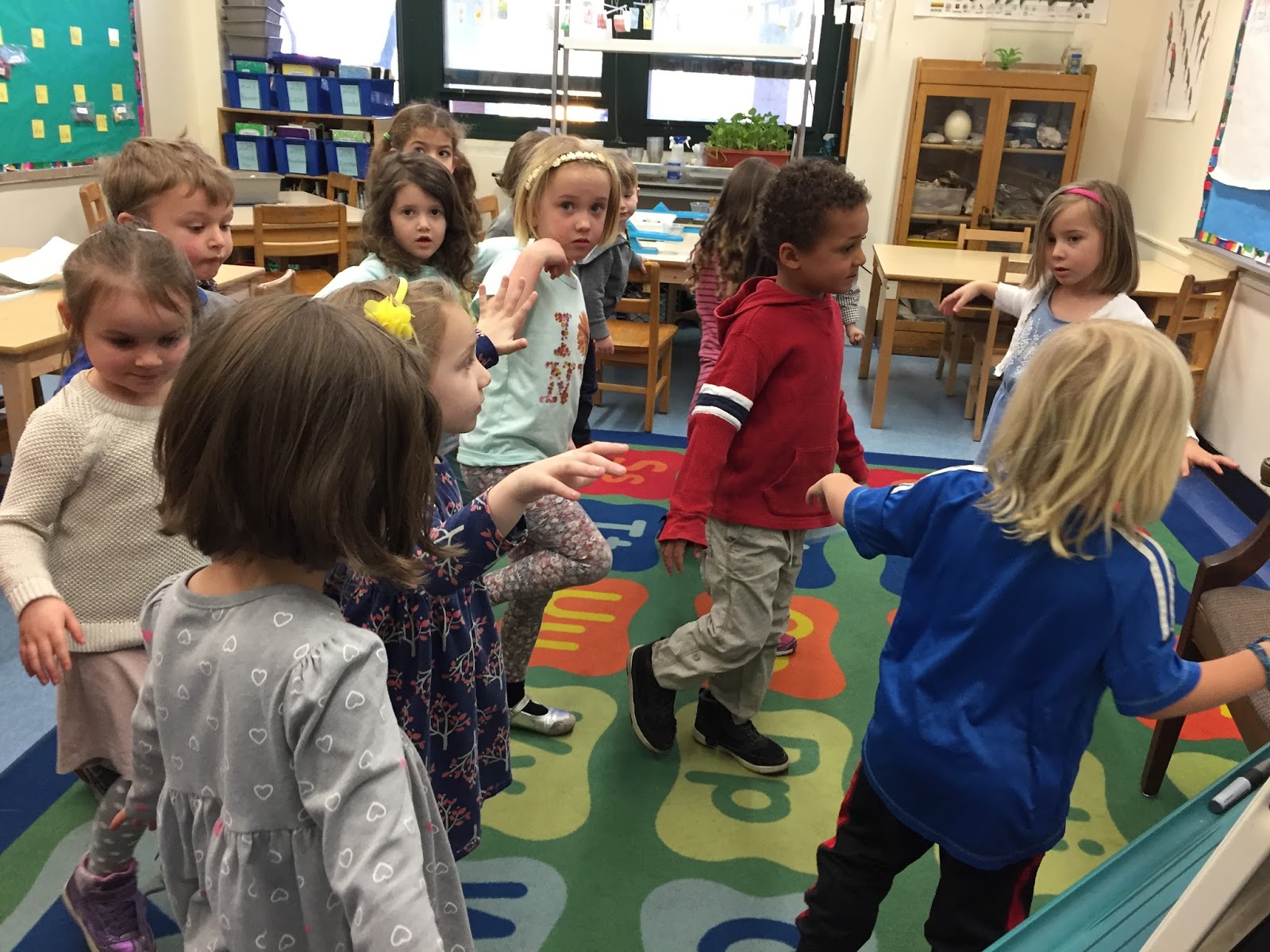
We found out we are excellent balancers!  We can balance our bodies, use a scientific tool called the balance scale and balance blocks!  It may look easy, but at times it can be tricky!


Which side is heavier?


Careful!


Some good balancing!


That is too heavy.

Look how tall my tower is and it's balanced!


We can balance on one foot!


Ahhhhhh!


Thursday, March 23, 2017

A Visit From a Biomaterials Organic Chemist!

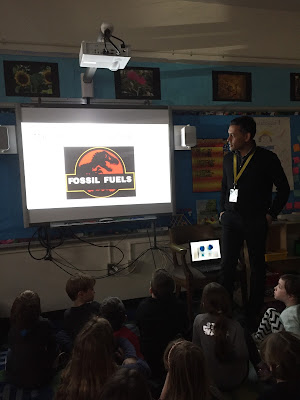
Gangadhar Jogikalmath, Mira's dad (2-227) and an organic, polymer chemist, came to talk with the class last week!  He has materials start up company in Boston that makes high performance fabrics.

Gangadahar started talking about all the different materials we come across in our lives....


Gangadahar uses polymers when making his fabrics.  The fabrics can repel water or are fire retardant.  We talked about why someone would want a fabric that doesn't get wet (swimsuit, raincoat, a t-shirt) or won't catch on fire (a fireman's clothes, our clothes, a blanket).
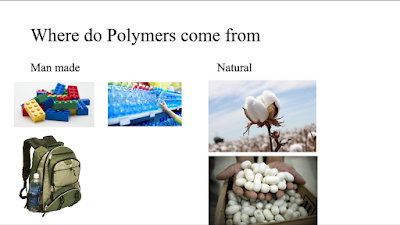


The bottom right picture stumped many of us..they
are silkworm cocoons!


Man made polymers come from...


Polymers are derived from oil and fibers are made from them!  We were excited to see that sand, silt and rock were part of the process!  We just finished that unit!  We got to touch nylon pellets and feel a reel of very thin fiber thread!


We had so many questions! Gangadhar talked about DNA.  That was fascinating! The class wanted to know how many DNA strands were in so many things!   

I was curious about when he knew he wanted to become a scientist.  Gangadhar said he hadn't really thought about it, but remembered when "when I was in high school, I found a stack of old Scientific American magazines that intrigued me to no end.  The stories of scientists and their inventions were fascinating." That was the earliest memory of when he wanted to become a scientist.  

Thank you so much for coming to our science class Gangdhar!

Thursday, March 16, 2017

2nd Graders Make Mobiles!

Before moving onto motion, 2nd graders are using all their knowledge about balance, balancing points and counterweights to create a mobile that balances!


Rubber bands, paperclips, straws and paper!

It can be hard to get the rubber band in
the paperclip.

The mobile moves so we draw on both sides of the paper.


In order for the mobile to be stable, the straw needs to
go through the small side of the paperclip. 


Once the mobile is constructed, you have to
move the paper clips around to balance it!


I went to the Guggenheim Museum last weekend and saw quite a few mobiles by Alexander Calder.  If you find yourself on the upper east side, I highly recommend you stop by and marvel!

Red Lily Pads

Arc of Petals


Untitled, pedestal-based mobile